
BLOG
Teaching Notes
Competition guides, exam strategies and learning methods — seventeen years of teaching experience, written for parents.

Can Children Learn Pinyin and Chinese Characters Together? A Hong Kong Parent's Guide
Pinyin and traditional Chinese characters can be learned alongside each other when a child's listening, short-word decoding and character recognition are treated as distinct tasks.
Read full article Learning Methods
How Should Primary Pupils Revise English Writing? A Five-Point Clarity Checklist
A Hong Kong parent can first ask whether a reader understands the child's draft, then check content, organisation, sentences, word choice and spelling or punctuation, one priority at a time.
About 9 min read Learning Methods
Should Your Child Continue Learning Spanish? Five Signs of Engagement and Response
One reluctant lesson does not settle whether a child should stop Spanish. Look at participation, understanding, responses, reactions to difficulty and your family schedule before discussing changes with a teacher.
About 9 min read Speech Festival Prep
Preparing for Speech Festival Day: A Hong Kong Parent's Checklists for Reporting, Voice and Nerves
First check whether your child's event is live or video and read the organiser's latest notice. For a live event, use four checkpoints: before leaving, arrival, waiting and afterwards.
About 10 min read Learning Methods
What If a Child Gets Stuck with Chinese Literacy? Check Character Form, Meaning, Reading Exposure and Output
Slow character recognition or weak comprehension is not always a matter of memorising more characters. Separate character form, meaning, text exposure and short output before choosing practice.
About 10 min read Learning Methods
How Should Primary Pupils Balance English Grammar and Speaking? Four Principles Instead of an Either-Or Choice
Grammar and speaking do not need to compete. Put one needed structure into a purposeful speaking task, complete the meaning first, review selected errors afterward, then carry it into sentence self-checking.
About 10 min read Exam Guides
How Is GAPSK Different from a School Mandarin Assessment? Hong Kong Parents Should Confirm the Purpose First
GAPSK and school Mandarin assessments differ in purpose, task source and evidence. Check the school notice and current GAPSK requirements before planning practice around the child's actual task performance.
About 9 min read Learning Methods
What Should Parents Do in Online One-to-One Lessons? Four Jobs Instead of Sitting Beside the Child Throughout
A parent's useful roles are pre-lesson setup, handover, a clear intervention boundary and post-lesson review. Sitting beside the child throughout is not a fixed requirement.
About 9 min read Learning Methods
How Should Parents Evaluate an Online Mandarin Trial Lesson in Hong Kong? 5 Interaction Signals
An online Mandarin trial should not be judged only by whether a child enjoyed it or answered correctly. Observe listening, response, interaction, teacher adjustment and post-lesson guidance.
About 9 min read Learning Methods
Why Can a Child Read with Phonics but Not Spell? Separate Hearing, Segmenting, Blending and Word Patterns
Reading a word does not always mean a child can work back from sounds to letters. Separate sound hearing, segmenting, blending and orthographic memory before choosing spelling practice.
About 9 min read Learning Methods
How Should Children Practise Spanish A1 at Home? A Weekly Listening, Speaking, Reading and Writing Routine
Spanish A1 home practice does not need four skills crammed into every day. Use familiar instructions, short phrases, high-frequency words and small outputs, then keep one observable note each week.
About 9 min read Exam Guides
How Should Children Prepare for Cambridge YLE? Four Skills to Check from Pre A1 Starters to Flyers
Cambridge YLE preparation should not begin by choosing a level from age or school year alone. Use current official samples and a child’s listening, speaking, reading and writing tasks to choose the next step.
About 9 min read Speech Festival Prep
How Should You Choose an English Speech Festival Piece? Check the Category, Understanding and Rehearsal Conditions First
For a Hong Kong Schools Speech Festival English piece, check the current category and official list first, then see whether a child can understand it, speak it clearly and rehearse it steadily—not simply whether it is short or familiar.
About 8 min read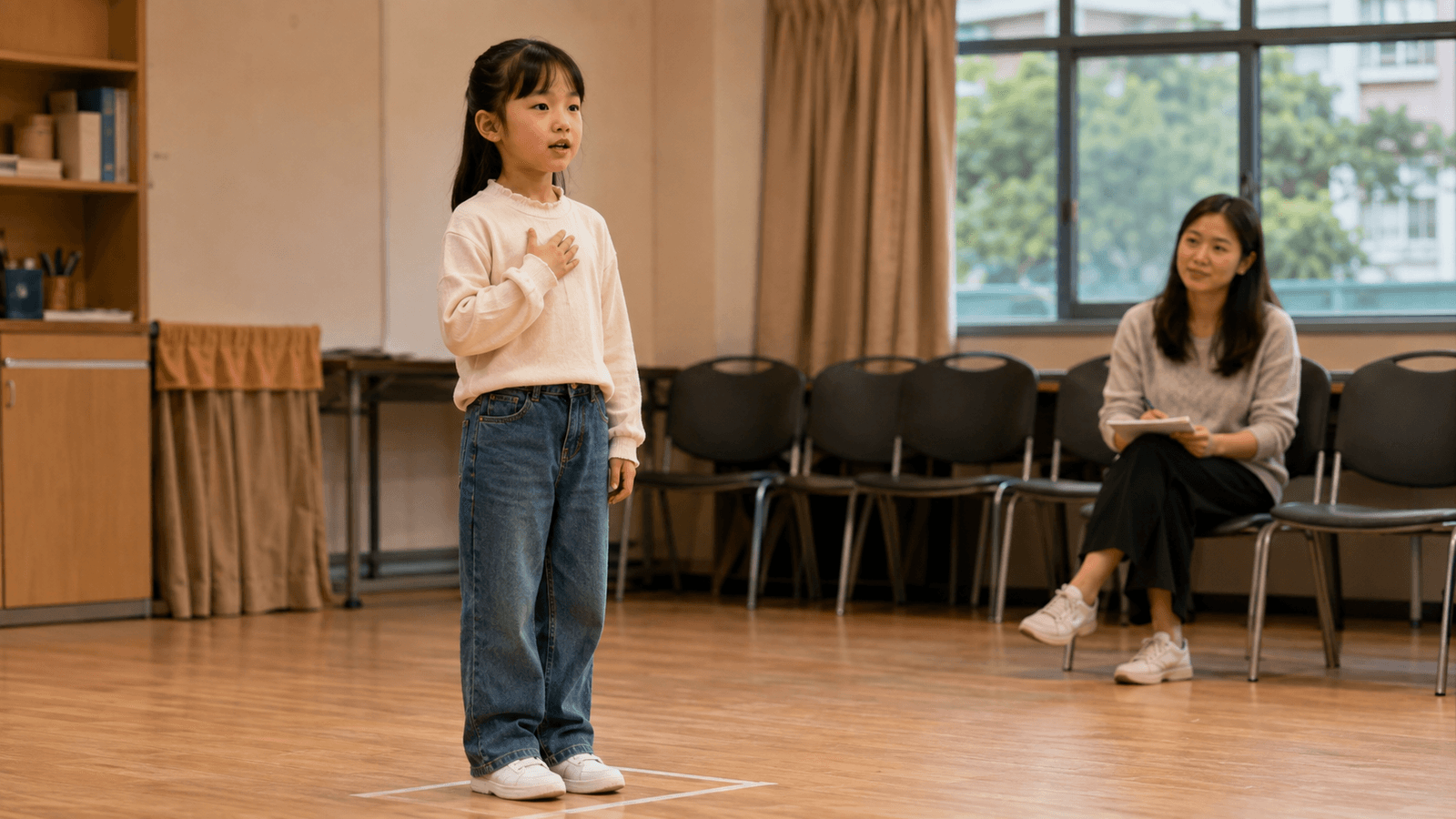 Speech Festival Prep
What If a Child Is Nervous Before Solo Recitation? Use a Pre-Performance Checklist for Voice, Eye Line and Pauses
Nerves before solo recitation do not have to mean shyness. Separate an unfamiliar setting, a blocked first line, rushed breathing and fear of errors, then use short simulations and recovery steps that can be observed.
About 8 min read Learning Methods
How Should Primary Pupils Practise English Reading Comprehension? Separate Vocabulary, Main Idea and Evidence First
When a child reads an English passage but cannot answer the question, the first problem may be vocabulary, the main idea or finding evidence. Use a short passage to see which step stops them first.
About 8 min read Learning Methods
What If a Child Does Not Dare to Speak English? Check Vocabulary, Understanding or Fear of Mistakes First
A child who does not speak English is not necessarily just shy. Separate missing words, an unclear question, fear of mistakes and an interaction that moves too fast, then use short responses to observe the next step.
About 8 min read Exam Guides
How Should Children Prepare for the GAPSK Oral Test? Listening, Responding, or Picture Description First?
Do not begin GAPSK oral preparation by memorising a long set of answers. Use one short instruction, one familiar picture and one follow-up question to see where a child stops, then check the current official requirements before choosing the next task.
About 8 min read Speech Festival Prep
How to Prepare a Speech Festival Video Submission: Sound, Framing and Rules Checklist
For a video submission, check the current official rules and applicable mode first, then complete one uninterrupted home simulation. Sound, framing, performance and submission details need separate checks; old-season rules cannot replace current guidance.
About 8 min read Learning Methods
How to Choose One-to-One Online Mandarin for Hong Kong Children: 5 Readiness and Interaction Checks
A one-to-one online Mandarin decision is not about age or platform alone. In a short interaction, parents can observe listening, imitation, short replies, instruction-following and home/device support before choosing a trial or a level check.
About 8 min read Learning Methods
How Should Children Start Spanish Pronunciation? Vowels, Stress, or r/rr First?
For a beginner child, start by hearing the five Spanish vowels and using them in high-frequency short words, then notice stress in short phrases. r/rr can be revisited as vocabulary grows; it does not need to be a barrier to speaking.
About 8 min read Learning Methods
Using AI for Children's English Speaking Practice: A Safe, Useful Parent Guide
AI can run short English question-and-answer practice, but it should not replace human feedback. This guide covers account and privacy checks, a four-step routine, observable speaking signals and when to bring the question back to a teacher.
About 9 min read Learning Methods
Do Children Get Distracted in Online Classes? Lesson Design and Parent Support That Help
A live online one-to-one lesson does not automatically make a child more distracted. Short tasks, clear instructions, fewer device interruptions and one post-class observation show parents and teachers what to adjust next.
About 8 min read Exam Guides
How Does Trinity GESE Work? How Is It Different from Cambridge YLE?
GESE centres on live listening and speaking with an examiner, while Cambridge YLE looks across listening, speaking, reading and writing. Compare the skills, tasks and selection process before choosing an English assessment.
About 9 min read Learning Methods
How Can You Build a Child’s Daily Reading Habit? Start with 10 Minutes
Ten minutes can be an easy reading starting point, not a formula that guarantees a child will love books. Use this family flow for choice, shared reading, screens, resistance and observable checks.
About 8 min read Exam Guides
HSK Preparation by Level: How Long Does Each Stage Take?
There is no fixed number of months that fits every HSK learner. Start with the learner's baseline, purpose and listening, speaking, reading and writing gaps, then plan around observable tasks. This guide maps HSK1 to advanced preparation for Hong Kong families.
About 10 min read Speech Festival Prep
How to Practise Group Recitation: Timing, Formation and Voice Parts
Group recitation is not several voices made louder. It is a shared system of voice parts, rhythm, breathing, formation and interpretation. This guide compares group and solo recitation, gives a five-step rehearsal route and turns the final check into observable items.
About 9 min read Learning Methods
Is Spanish Worth Learning for Kids? A Practical Guide to Starting a Third Language
Whether Spanish is worth learning for a child depends less on a promise of future advantage than on a clear purpose, realistic time and a suitable learning route. This guide compares starting now with waiting, then maps four beginner steps and observable signs for parents.
About 9 min read Learning Methods
How to Learn Phonics Effectively: 4 Mistakes Parents Often Make
Phonics is not about memorising A to Z and suddenly being able to read. Children need to blend learned letter sounds into words, then reuse them in short decodable reading. This guide gives a sequence, a four-step routine and four common pitfalls.
About 9 min read Mandarin Pronunciation
Hong Kong Children's 'Hong Kong Mandarin': 10 Common Pronunciation Problems and How to Fix Them
Hong Kong Mandarin is usually a transfer effect from Cantonese, not carelessness. This guide maps 10 common sound confusions and shows how to listen, adjust the mouth, practise contrasts and transfer the change into real sentences.
About 10 min read Learning Methods
Top 20 Primary English Grammar Mistakes: Understand the Cause, Then Fix It
When a child keeps making the same grammar error, it is usually not carelessness but interference from Chinese thinking. This article groups the 20 most common primary mistakes, explaining for each why it happens and what to do right away.
About 10 min read Exam Guides
IELTS or TOEFL? How Hong Kong Students Should Choose for University (2026 Comparison)
Both IELTS and TOEFL are widely accepted proof of English ability, but the format, scoring and best-fit candidate differ. This article uses one comparison table and a decision flow to help Hong Kong students work backwards from their target education system.
About 9 min read Learning Methods
Foreign or Local Tutor? The 5 Real Differences Before You Book English Conversation Lessons
When it comes to English conversation, what actually separates a foreign tutor from a local one? Rather than asking which is better, this article breaks it down across five angles — accent, grammar support, price flexibility, how comfortable the child feels speaking, and exam alignment — so you can work backwards from your child's goal.
About 8 min read Exam Guides
HSK 3.0 Explained: What the New 9-Level System Means for Hong Kong Kids (2026)
HSK has moved from six levels to nine, with handwriting required from the start, translation added at higher levels, and closer CEFR alignment. This guide compares old vs new and gives Hong Kong parents practical advice on level choice and prep.
About 9 min read Speech Festival Prep
78th Hong Kong Schools Speech Festival: Choosing Your Class, Piece and Rehearsal Timeline (2026)
Registration for the 78th Hong Kong Schools Speech Festival is open. This guide helps you decide the language and class, understand how pieces are chosen, and gives a four-phase timeline from entry to stage that parents can follow.
About 8 min read Speech Festival Prep
Preparing for the Hong Kong Schools Speech Festival: A Complete Timeline from Entry to Stage
Entries for the Hong Kong Schools Speech Festival open in August and the heats run from November to December — roughly three months in between. This guide sets out a four-stage timeline you can follow directly, how to judge whether a piece suits your child, and exactly what parents can do at home.
About 8 min read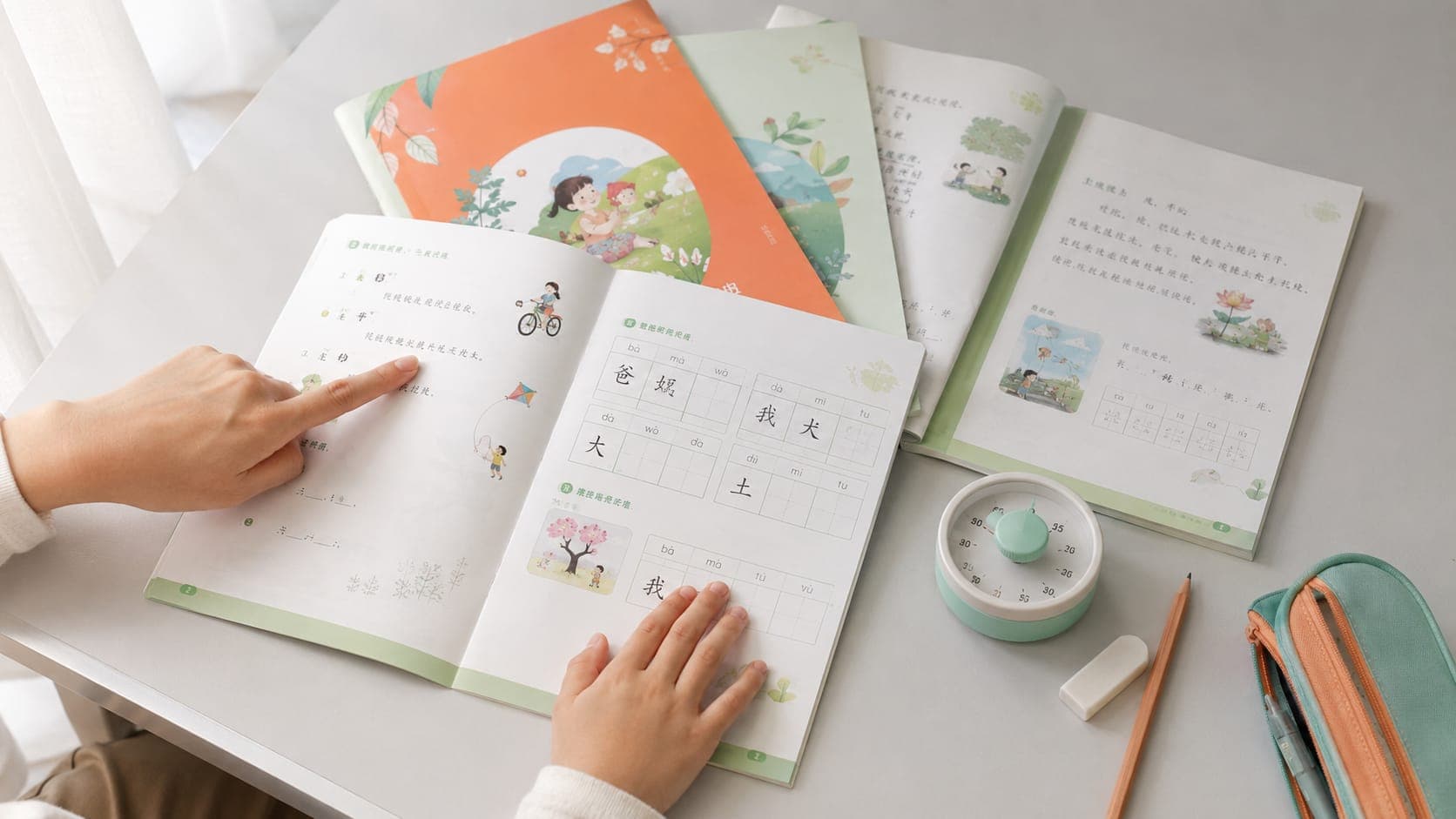 Exam Guides
GAPSK, YCT, HSK and PSC — What's the Difference? One Table to Settle Your Chinese Exam Choice
The four exam names look alike, but the awarding bodies, age ranges, character sets and purposes are entirely different. This guide lays out the distinctions in a comparison table and gives you a step-by-step way to work backwards from your goal.
About 7 min read Learning Methods
Does Online One-to-One Really Work? Three Things That Decide the Outcome
Parents worry most that their child will be distracted online. After seventeen years of teaching, we find the difference in results rarely comes down to online versus in-person — it comes down to whether the teaching genuinely adapts to the child, whether progress is visible, and whether the material forms a proper system.
About 6 min read