
Hong Kong Children's 'Hong Kong Mandarin': 10 Common Pronunciation Problems and How to Fix Them

Why does Hong Kong Mandarin happen? Separate accent from a fixable sound contrast
Hong Kong Mandarin is not a label that needs to be erased. It often describes a familiar Cantonese pronunciation habit being carried into Mandarin. The Hong Kong Education Bureau's Mandarin examples recommend comparing Cantonese and Mandarin, then moving from listening and pinyin to characters and meaningful context. In practice, identifying the exact sound and position that is confused is more useful than asking a child to repeat the whole sentence.
Ten common Hong Kong Mandarin sound confusions
This is a diagnostic map, not a statistical ranking of every Hong Kong child. Read the examples slowly first, then place them in short sentences. If a child can distinguish the sounds slowly but merges them in a sentence, the missing piece is usually listening and automaticity rather than mouth shape alone.
| Area | Quick contrast | Why it happens | First practice |
|---|---|---|---|
| 1. Flat z/c/s vs retroflex zh/ch/sh | zī / zhī; sì / shì | Cantonese does not use the same retroflex contrast, so the tongue tip may stay too far forward. | Hide the pinyin, listen and sort two sounds, then read the words. |
| 2. Initial r | rì, rè, ràng | The tongue shape and friction may be replaced by a lighter l-, y- or vowel-like onset. | Sustain the Mandarin r friction, then add the final; do not copy an English r. |
| 3. j/q/x vs zh/ch/sh | jiā / zhā; qī / chī | The two groups sit close together and shift when speech becomes fast. | Use one final with two initials, alternate slowly, then add a short sentence. |
| 4. n vs l | nán / lán; nǎo / lǎo | A nasal onset needs air through the nose, so a familiar l may replace it. | Pinch the nose to feel the difference, then alternate n-l-n-l and paired words. |
| 5. f vs h | huā / fā; hǔ / fǔ | Mandarin h is produced further forward than the Cantonese-like throat sound many learners expect. | Use a tissue or palm to notice the airflow, then sort f and h words. |
| 6. Front -n vs back -ng | fēn / fēng; zhēn / zhēng | The ending location changes, but the final nasal is often swallowed in fast speech. | Hold the ending, feel the resonance, then shorten it towards natural speed. |
| 7. ing/in vs eng/en | xīng / xīn; shēng / shēn | Similar Cantonese and Mandarin sounds can be treated as one, and mouth opening affects clarity. | Start with listening; point to the final, then read three words with the same initial. |
| 8. ü vs u/i | lǜ / lù; yú / yí | ü needs a forward tongue with rounded lips, while pinyin spelling can hide the physical movement. | Make the smiling tongue position and rounded lips silently, then add j/q/x/n/l. |
| 9. Four tones and neutral tone | mā, má, mǎ, mà; háizi | Cantonese tone patterns do not map directly to Mandarin contours. | Draw the contour with a hand, practise two-syllable words, then use questions and answers. |
| 10. Rhotic endings and connected tone | nǎr, wánr; nǐ hǎo | Not every syllable is pronounced exactly as the written characters suggest; literal reading sounds choppy. | Imitate the whole phrase first, then mark what is actually heard. |
A four-step correction routine: from hearing the difference to using it naturally
- 1
1 | Locate by listening
Use a teacher or reliable recording. The child points to the initial, final or tone heard before trying to speak.
- 2
2 | Give one mouth cue
Change one movement only: tongue tip, nasal airflow, lip rounding or the direction of the tone.
- 3
3 | Use a minimal contrast
Alternate two to four words and replay the recording. Move on only when the child can hear and produce the contrast without a prompt.
- 4
4 | Transfer to context
Put the words into a sentence, question or reading passage, then test again the next day.

How can families practise without making speech stiff?
Just say it again
- The child cannot tell which sound was wrong
- The child waits for an adult prompt
- A word list improves but conversation does not
Diagnose one pattern first
- Record and label the initial, final or tone
- Give one physical cue
- Move from word to sentence and retest tomorrow
- 1Choose one area per session; do not correct tones, grammar and vocabulary at the same time.
- 2Keep the first natural recording and the corrected recording so the child can hear the difference.
- 3Use everyday sentences about shopping, introductions or school reading instead of long tongue twisters only.
- 4After seven days decide whether to move on; if the child cannot hear the contrast, book a focused diagnosis.
Can online Mandarin lessons improve pronunciation? Feedback design is the key
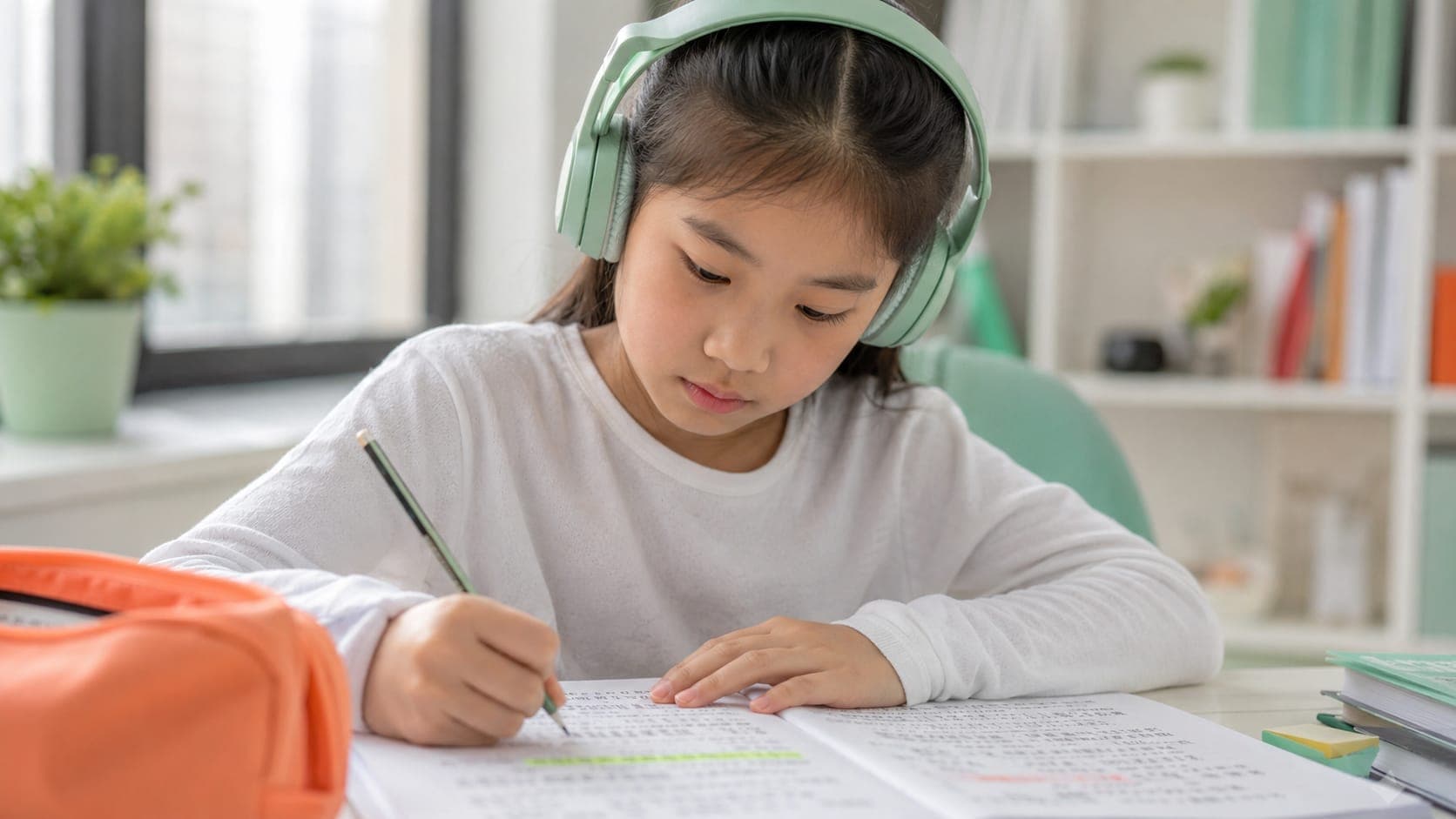
Yes, but a video call alone is not a pronunciation method. Effective online correction lets the teacher hear both natural speech and contrast practice, gives one visible mouth cue, and leaves a recording or word list for the next check. If a child only echoes the teacher without listening, recording and reusing the target in a sentence, the original habit can return as soon as the lesson ends.
When is a focused teacher diagnosis worthwhile?
A short one-to-one diagnosis can save time when a child can read slowly but merges sounds in conversation, or when a family cannot tell whether the issue is an initial, final or tone. If the goal is GAPSK, school Mandarin reading or an interview, plan exam items separately from everyday conversation. GAPSK's official pages publish age bands and listening, speaking and reading components, so always check the current notice.
From pronunciation practice to the right course or exam path
Key takeaways
- Hong Kong Mandarin patterns often reflect a Cantonese–Mandarin sound-system transfer, so diagnose before correcting.
- Check retroflex sounds, n/l, nasal endings, h, ing, ü and tones first; do not practise all ten at once.
- Use four stages: listen, adjust one mouth movement, practise a contrast, then transfer it into real speech.
- Online correction works when it includes individual feedback, replayable recordings and a follow-up check.
- GAPSK levels and components can change; verify the latest official announcement before registering.
Frequently Asked Questions
- Q1Does a retroflex sound have to be exaggerated?
- No. The goal is a stable contrast in tongue position and friction between zh/ch/sh and z/c/s, not an uncomfortable curl. First make the difference clear in slow words, then increase speed.
- Q2Does n/l confusion mean a child's Cantonese is wrong?
- No. It is often a transfer between sound systems. Use nasal airflow as a physical cue, then practise n-l alternation in words and short sentences without labelling or blaming the child.
- Q3How can we practise front and back nasal endings at home?
- Start with contrasts such as fēn/fēng and zhēn/zhēng. Hold the ending and notice the resonance, then shorten it towards natural speed. If listening is still unstable, do not rush to fast speech.
- Q4Will tone songs alone fix four-tone problems?
- Tone songs can support memory but cannot replace listening and context. Use a hand gesture for the contour, practise the four tones with one initial, then move into two-syllable words and questions.
- Q5Can online Mandarin lessons improve Hong Kong pronunciation?
- They can, when the teacher diagnoses the child's initials, finals or tones and gives replayable, individual feedback. Repeating a whole paragraph without listening and contrast work is unlikely to transfer.
- Q6What age is best for pronunciation correction?
- There is no single best age. A child who can follow a simple instruction and imitate sounds can start with playful listening; older learners can connect correction to reading, speaking or an exam goal.
Sources
Online language education in Hong Kong · 17 years of teaching
Written by the Jinghua Language academic team. Founded in 2009, our centre specialises in live one-to-one online language tuition for students aged 3 to 18, covering Mandarin Chinese, English, Spanish, public examination preparation and recitation training, with 38 teaching and coaching awards to date.
Meet the academic team and editorial standards →About Us →Awards & Honours →
Published 2026-08-11 · Updated 2026-08-11