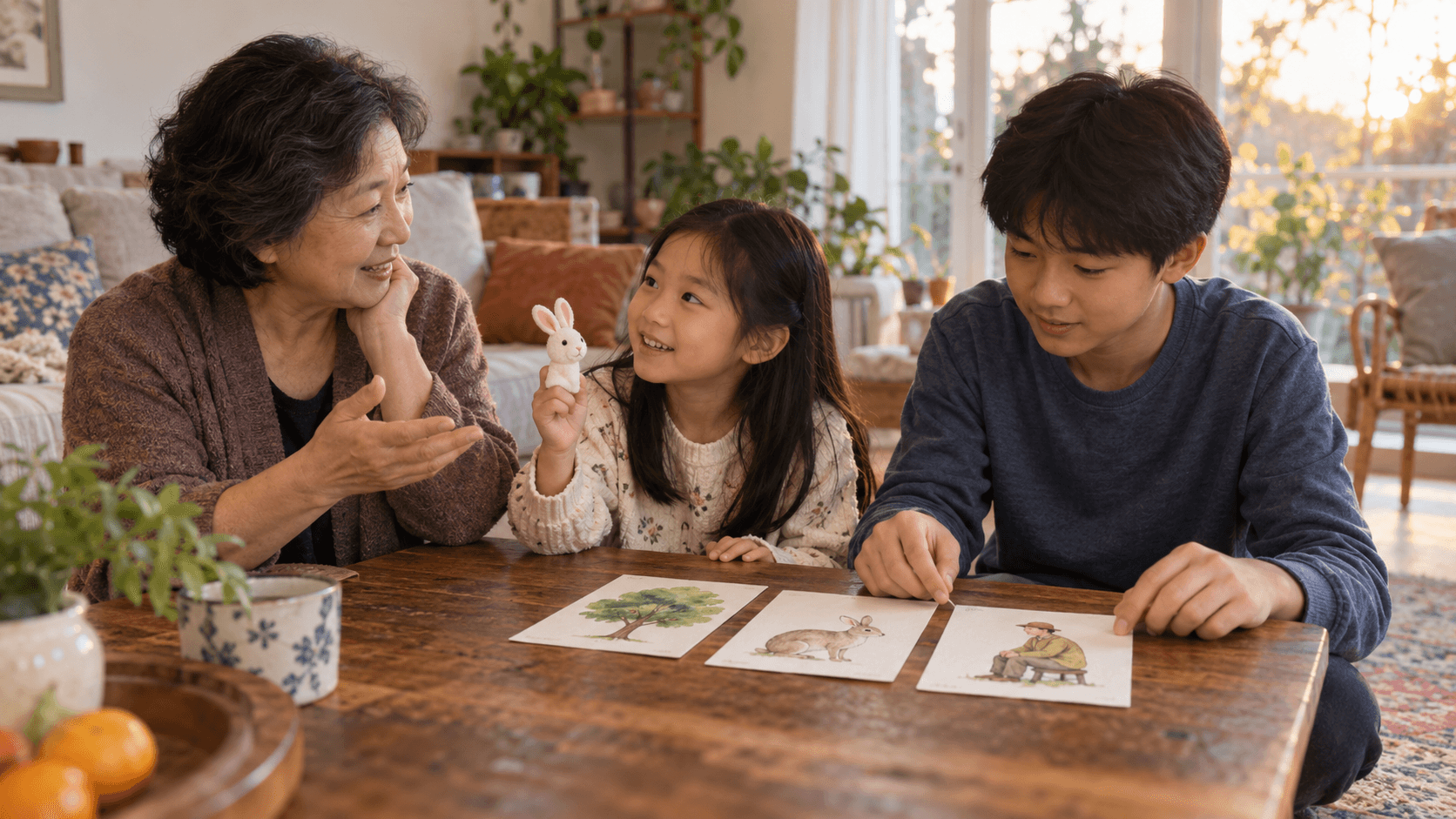
How Should Children Start Spanish Pronunciation? Vowels, Stress, or r/rr First?
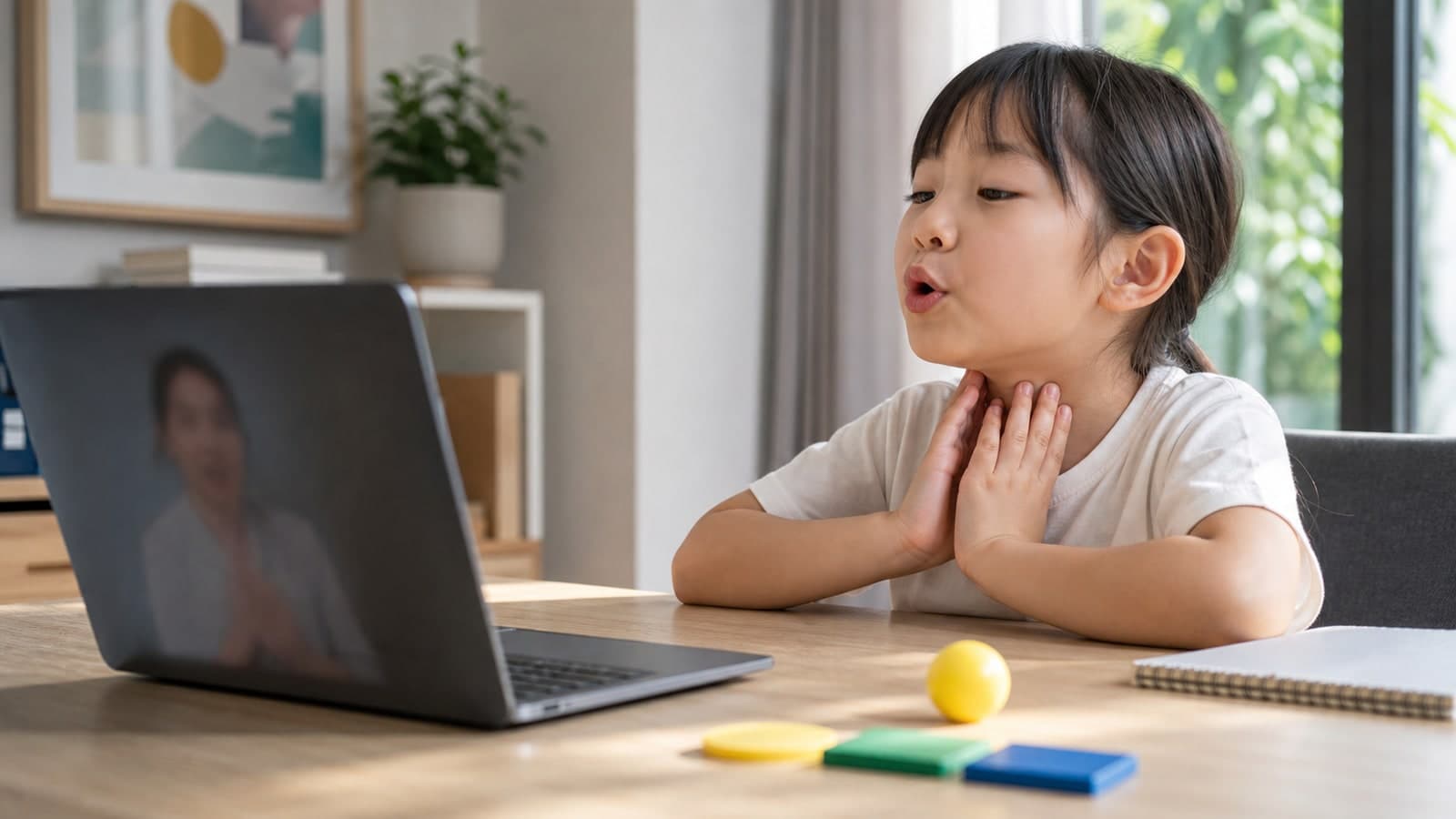
What should a child practise first in Spanish pronunciation? Make vowels and short words hearable and speakable
A beginner child does not need a fluent r/rr before meeting Spanish. A steadier starting point is to hear and imitate a, e, i, o and u, place them in high-frequency short words the child understands, then notice which syllable sounds more prominent in a short phrase. The difference between r and rr can be revisited as relevant words and sentences appear. If it is not yet possible, it should not become a barrier to speaking or entering a conversation.
What do vowels, stress and r/rr each do? First see their role in short words and short phrases
| Element | A useful beginner task | What does not need to be pursued yet |
|---|---|---|
| Five vowels | Hear one vowel with a familiar object, action or short word, then try it once. | No long word list or adult-speaker comparison is needed in one session. |
| Stress | Listen for the more prominent beat in a two- or three-syllable word or short phrase, using a clap, nod or repeat. | There is no need to begin by memorising a rule list. |
| r/rr | When relevant words appear, hear a teacher model the difference in context and try without pressure. | A rolled r is not an entry test or a reason to stop conversation. |
What should be practised now and what can wait? Put understandable short tasks first
Put into short practice now
- Hear and imitate the five vowels one at a time.
- Use high-frequency short words connected to a visible object, person or action.
- Notice rhythm or stress in very short phrases.
Revisit after vocabulary grows
- Longer words, linked sentences and finer fluency.
- Stability of r/rr in different words, without deciding from one attempt.
- Spelling rules, exceptions or exam requirements after the family goal is clear.
How can practice begin at home? Use four steps from vowel listening to short conversation
- 1
1|Listen for a vowel
Model one vowel with a visible object or action. Signal: can the child choose, point or attempt a repeat?
- 2
2|Use a high-frequency short word
Place one or two vowels in a short word. Signal: when picture or object changes, can the child still hear the sound?
- 3
3|Add stress and a short phrase
Use a clap, beat or natural repeat in a short exchange. Signal: can the child retain an approximate rhythm and express meaning?
- 4
4|Revisit inside interaction
Keep r/rr or another sticking sound as a review point. Signal: can the child continue communicating and try again after a model?
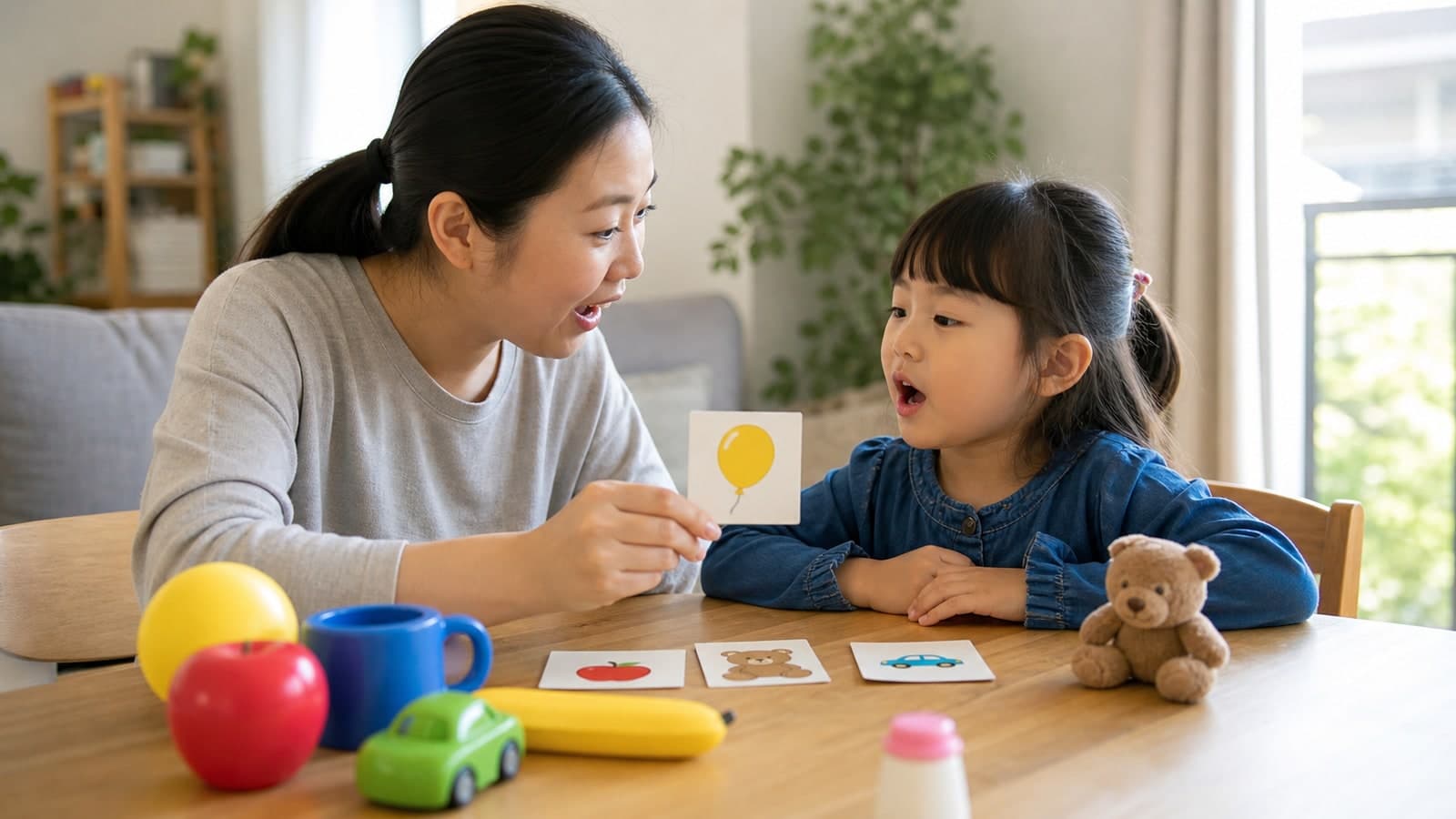
How can home practice avoid becoming a sound list? Use brief, repeatable turns with meaning
| Home scene | One short task | Observable signal |
|---|---|---|
| Holding an object or looking at a picture | An adult says a short word; the child chooses, points or repeats once. | Does the child connect the sound with the object rather than only guess from mouth shape? |
| Before walking, tidying or play | Choose one short phrase and take turns saying it once without repeated correction. | Does the child join and retain their intended meaning? |
| One-minute review after class | Ask which sound was easiest to hear or which word to try again. | Can the child name one secure point or one they want to hear again? |
Will Chinese and English interfere with Spanish? A language background is a clue, not a built-in obstacle
A child who already meets Chinese, Cantonese or English may use familiar spelling and rhythm to understand a new language. That gives a teacher clues, but cannot predict confusion or speed. Keep one sound or rhythm target at a time, then try it in a new word, picture or short phrase. Hearing or imitating it after context changes is more informative than sounding adult-like once.
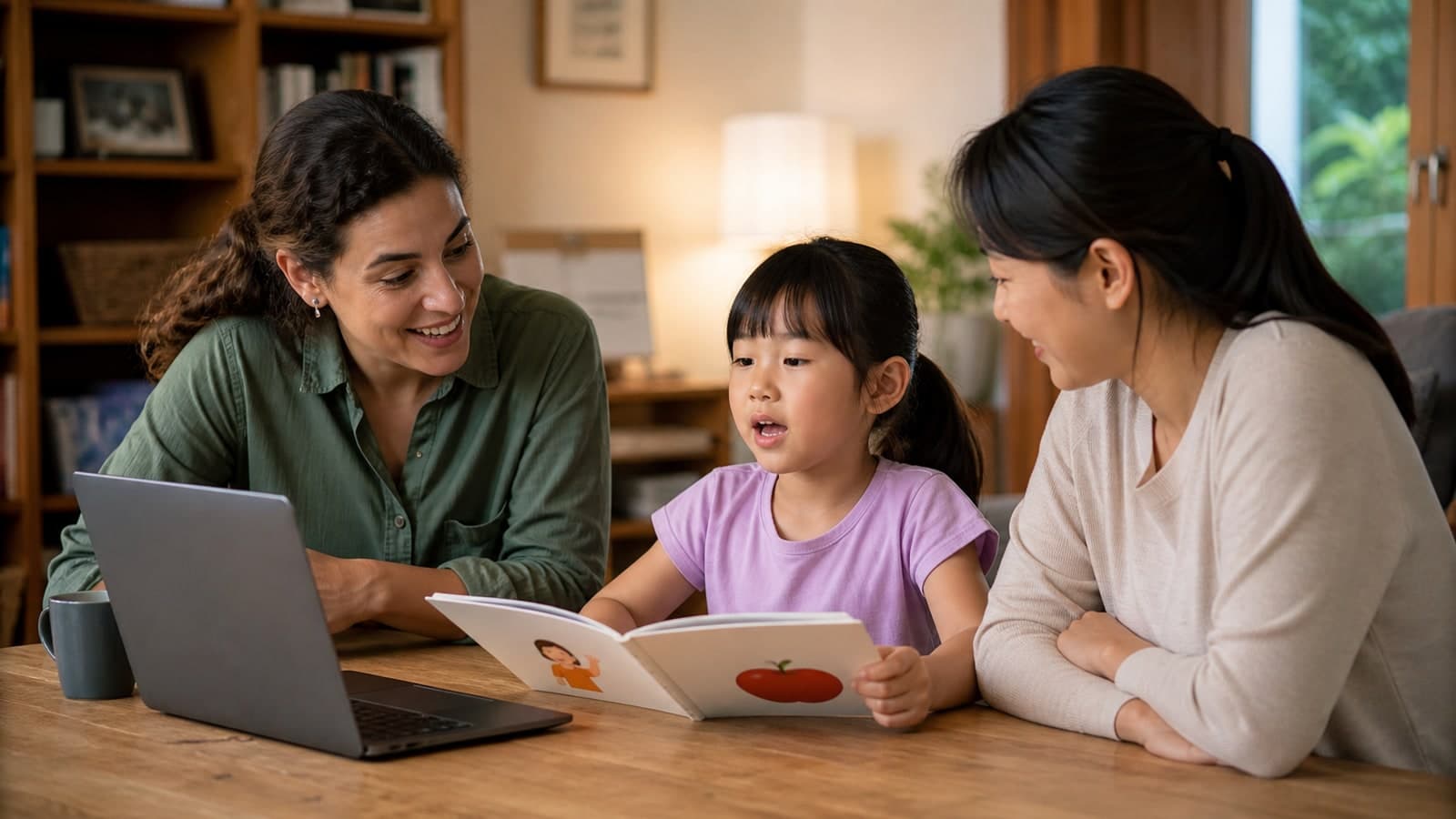
When can a child move into conversation or ask a teacher for help? When they can participate, not when every sound is perfect
- If a child can hear familiar vowels or short words, is willing to imitate and take a turn, they can enter a very short conversation.
- If a child only guesses from mouth shapes or stops whenever a word changes, return to listening and meaningful short words rather than adding rules.
- If r/rr creates tension or prevents speaking, keep the communication task and ask a teacher to model it gradually in suitable vocabulary.
- When the family wants to connect with immersion, school learning or an exam goal, ask a teacher to observe the current listening, speaking, reading and writing starting point.
Connect a pronunciation starting point to the next Spanish learning scene
Key points: listen first, use it next, and keep r/rr within a manageable review rhythm
- For beginners, five vowels and high-frequency short words can build a hearable, speakable base before short-phrase stress.
- r/rr can be revisited progressively; it is not a barrier before Spanish or conversation.
- Use one sound in one scene and observe whether the child can still hear or try it with a new picture, word or turn.
- Bring home languages, family goals and one practice observation to a teacher when understanding a Spanish starting point.
Key takeaways
- Start Spanish with five vowels, high-frequency short words and short-phrase rhythm.
- r/rr can be revisited as vocabulary grows; it is not a barrier to conversation.
- One sound, one meaningful scene and one observation make the next adjustment easier.
Frequently Asked Questions
- Q1What should a child learn first in Spanish pronunciation?
- Start with hearing and trying the five vowels, then use a few high-frequency short words and short-phrase rhythm. The early aim is to hear, try and understand meaning, not to learn every rule at once.
- Q2Does r/rr need to be mastered at the beginning?
- No. When vocabulary contains r or rr, let the child hear a model and try. If it is not yet possible, they can keep communicating and revisit it gradually in short words and phrases.
- Q3Will Chinese and English confuse Spanish pronunciation?
- A child may use familiar sounds and rhythms to understand Spanish, but that cannot predict confusion or speed. Keep one sound task at a time and try it in another word or scene.
- Q4How can Spanish pronunciation be practised at home?
- Use short meaningful turns: say a short word and let the child choose, point or repeat; then take turns with a short phrase. Review one sound or rhythm each time rather than correcting continuously.
- Q5When can a child move into Spanish conversation?
- A child can enter very short conversation when they can hear some familiar short words, are willing to imitate and take turns. There is no need to wait for every sound to settle.
- Q6When should a teacher look at Spanish pronunciation?
- Ask for a live observation if the child only guesses from mouth shapes, stops whenever a word changes, avoids speaking because of one sound, or needs to connect with immersion, school learning or an exam goal.
Online language education in Hong Kong · 17 years of teaching
Written by the Jinghua Language academic team. Founded in 2009, our centre specialises in live one-to-one online language tuition for students aged 3 to 18, covering Mandarin Chinese, English, Spanish, public examination preparation and recitation training, with 38 teaching and coaching awards to date.
Meet the academic team and editorial standards →About Us →Awards & Honours →
Published 2026-08-25 · Updated 2026-08-25