
Is Spanish Worth Learning for Kids? A Practical Guide to Starting a Third Language
Is Spanish worth learning for kids? Start by checking the conditions
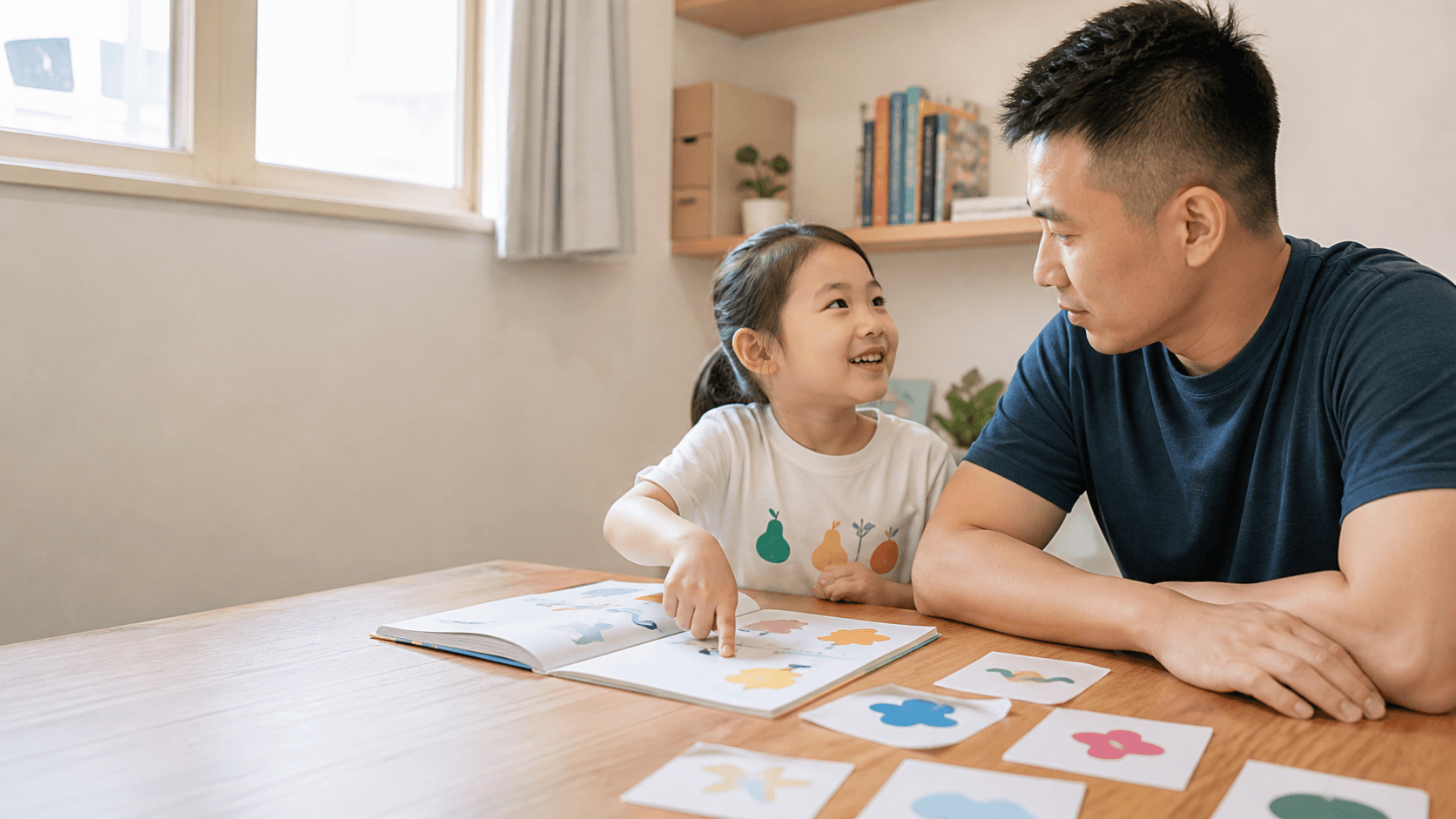
For a Hong Kong family, Spanish may be an interest, a school option, a language for travel or daily communication, or a route towards a later qualification. But “worth it” is not an answer outside the family’s context. Ask what the child wants to do with Spanish, whether a steady amount of time can be protected each week, and whether current Chinese and English priorities already fill the family’s schedule. If those three points are clear, begin with a low-pressure trial instead of promising a particular level.
| What to observe | More suitable to start now | Reasonable to wait or try briefly first |
|---|---|---|
| Motivation | The child is curious about Spanish sounds, culture, stories or a real use, and is willing to respond with short phrases. | The motivation is entirely adult-led and the child has no use they can understand yet. |
| Time | The family can protect a small, regular practice window without squeezing core Chinese or English work. | Exams, a school move or a changing routine already make another subject feel like pressure. |
| Starting point | The child can follow simple instructions, imitate sounds, or engage with new words through play and pictures. | The child is consistently exhausted or resistant, and the family cannot yet explain the problem Spanish should solve. |
| Next step | Begin with a level-and-goal check, then use pronunciation, phrases and situations. | Keep light cultural exposure and revisit a longer course when the goal or schedule is clearer. |

Separate four learning goals before deciding how far Spanish should go
“Learning Spanish” can mean four different things. Interest and cultural exposure focus on willingness to listen, play and understand simple content. School Spanish may require the school’s vocabulary, sentence patterns and written tasks. Travel and everyday conversation focus on understanding and responding in situations. DELE or SIELE preparation must follow the official exam format and the abilities described in the CEFR. The goal changes the materials, the balance of practice and the way progress should be checked.
| Goal | Start with | What parents can observe | When to adjust |
|---|---|---|---|
| Interest and culture | Songs, stories, pictures, greetings and everyday phrases. | The child chooses to listen, points out familiar content or sometimes responds with a short phrase. | If interest drops or the content is too hard, reduce the load or change the theme before adding grammar. |
| School Spanish | School vocabulary, basic patterns and listening, speaking, reading and writing tasks. | The child can follow classroom instructions and errors fall into patterns that can be tracked. | Reorder the lesson when school requirements or homework change. |
| Travel and everyday conversation | Introductions, shopping, directions, time and likes in short situational phrases. | With prompts, the child understands key words and completes a two-way exchange rather than reciting a monologue. | If the child only memorises a script, add variation and listening practice. |
| DELE or SIELE | A starting-point check followed by the official listening, speaking, reading and writing demands. | The learner can complete the relevant task in a timed or simulated setting, not only recall vocabulary. | Recheck the organiser’s current rules, level and dates whenever they change. |
A four-step Spanish route for complete beginners: sound to literacy
A complete beginner does not need to read an entire grammar book first. A more observable route is to hear and imitate a small set of sounds, use high-frequency words in useful short phrases, recycle them in themed situations, and only then add literacy or exam formats when the goal calls for them. The sequence can loop and adapt; it is not a promise that every child will move at the same speed.
- 1
1 | Pronunciation and listening
Hear vowels, consonants, stress and common linking clearly, then practise mouth shape, rhythm and short words. Do not treat the rolled r as the only entrance requirement.
- 2
2 | High-frequency words and phrases
Build greetings, colours, numbers, family and likes into short phrases the child can use immediately, so a question has a small answer.
- 3
3 | Themed conversation
Use games, stories or everyday situations for turn-taking. Add small variations and check whether the child can transfer a pattern to a new picture or context.
- 4
4 | Basic literacy or exam bridge
Once listening and speaking have a stable base, add spelling, reading, writing and mock tasks for school or DELE/SIELE. Follow the organiser’s latest official information.
How can Chinese, English and Spanish fit together without competing?
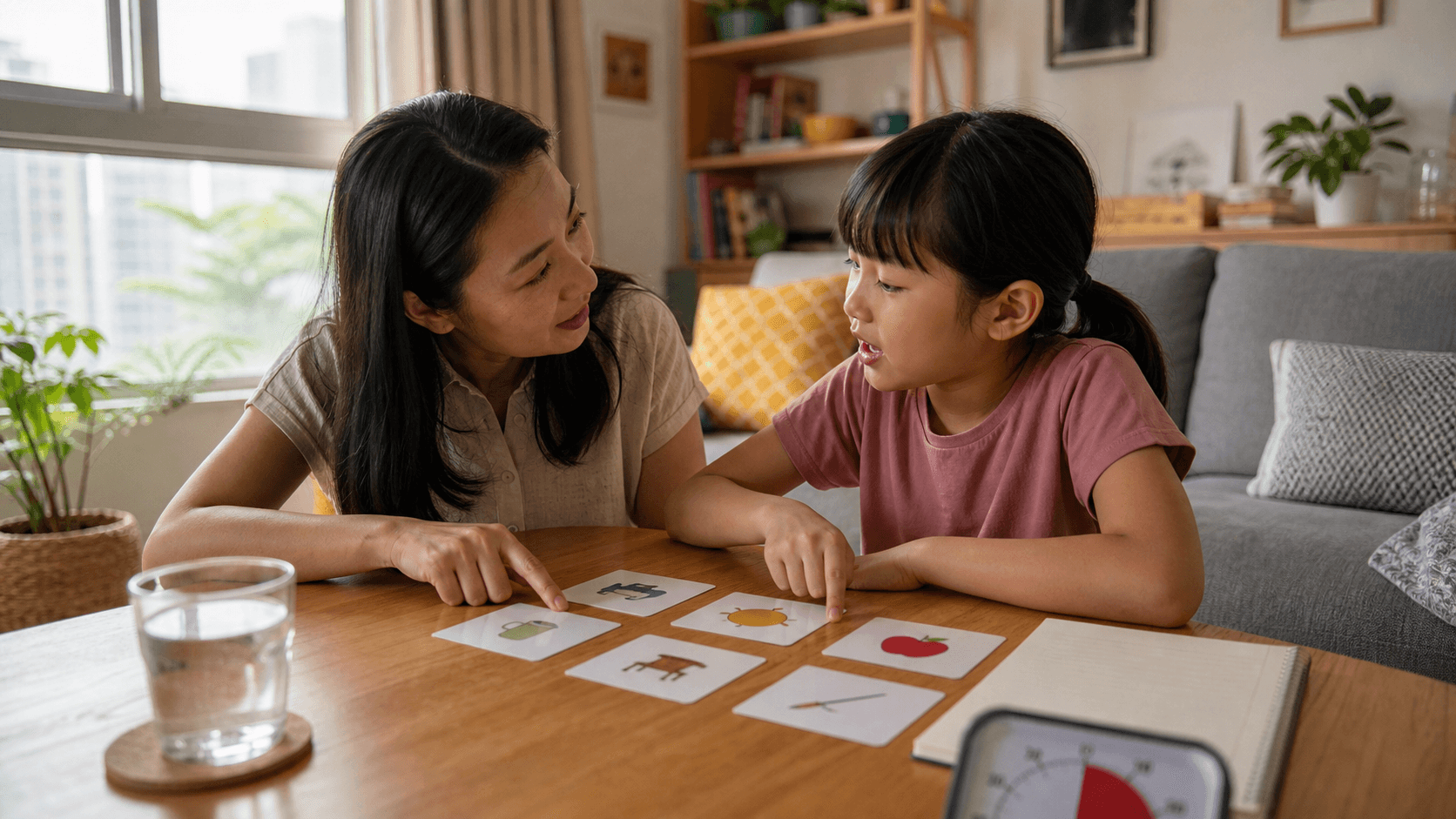
Plan Spanish around the child’s current Chinese and English priorities, not around an equal split of minutes. If the child is working on Chinese literacy, Mandarin pronunciation, English phonics, grammar or school writing, Spanish can begin with short listening and conversation or cultural contact. When the Chinese and English routines are stable, add reading, writing or exam work step by step. The aim is for each language to have a clear, non-conflicting use.
- Give languages different contexts: Chinese can carry school reading, English can carry phonics or writing, and Spanish can begin with short conversation or a cultural theme.
- Set one observable target at a time, such as following five classroom instructions or completing three exchanges, instead of chasing vocabulary, grammar and fluency at once.
- If fatigue, resistance or delayed homework appears, reduce new material and inspect the timetable before treating multilingual learning itself as the problem.
When should a child have a teacher assessment instead of more material?
If a parent cannot tell whether the difficulty is listening, pronunciation, retrieving phrases, understanding a situation or finding time, a short level assessment is usually more useful than buying a harder textbook. A child who responds to familiar pictures but stops in a new context, or whose Chinese, English and Spanish tasks compete for the same time, may need the route reordered. A teacher’s role is to turn the goal into observable listening, speaking, reading and writing tasks and adapt them to the family’s available time, not to promise a fixed pace or result.
From a Spanish goal to a course or exam route
Key takeaways
- Whether Spanish is worth learning for a child depends on the goal, time and route—not on being the earliest or fastest learner.
- Interest, school, everyday conversation and DELE/SIELE are different goals and should not be measured with one curriculum or one score.
- A beginner can move from listening and pronunciation to high-frequency phrases, situational conversation, then literacy or exam preparation; each step needs an observable output.
- When Chinese or English has a current priority, keep Spanish low-pressure and short before adding literacy.
- If the child stays stuck or the family cannot locate the difficulty, assess the starting point before adding lessons or material.
Frequently Asked Questions
- Q1What age can a child start learning Spanish?
- There is no single starting age for every child. When a child can follow simple instructions, is willing to imitate sounds and the family can protect a sustainable short routine, they can try listening, speaking and play-based activities. The age for starting learning is not the same as the official age rules for an exam.
- Q2Will learning Chinese, English and Spanish at the same time confuse a child?
- Multilingual learning does not automatically cause confusion, but piling up new material in three languages can create fatigue. Give each language a different context, reduce the number of new items and observe whether the child can understand and respond in familiar situations rather than judging occasional word mixing alone.
- Q3Should a complete beginner learn pronunciation, conversation or grammar first?
- Usually start with pronunciation and listening alongside useful short phrases, recycle them in situations, and then add literacy and grammar for the school or exam goal. Grammar still matters; it is more useful when it appears alongside the language task the child is trying to complete.
- Q4How should weekly lessons and home practice be arranged?
- There is no fixed number of lessons that suits every family. Fit a sustainable routine around Chinese and English homework, then practise short listening, pointing, speaking and reading turns at home. Recheck whether the child can respond to a new picture or question before increasing the load.
- Q5When is a child ready to prepare for DELE?
- Check for a stable listening, speaking, reading and writing base, a clear purpose and an exam date, then compare them with the latest Instituto Cervantes requirements. School DELE exams have specific audiences and levels; those official rules are separate from the age at which a child can begin learning.
- Q6When should a child have a teacher assessment?
- Consider a short assessment if the child cannot understand or respond even with familiar material, stops whenever the context changes, or the family cannot tell whether the issue is pronunciation, phrase retrieval, comprehension or scheduling. The teacher should explain the evidence and next step rather than promise a fixed pace or result.
Online language education in Hong Kong · 17 years of teaching
Written by the Jinghua Language academic team. Founded in 2009, our centre specialises in live one-to-one online language tuition for students aged 3 to 18, covering Mandarin Chinese, English, Spanish, public examination preparation and recitation training, with 38 teaching and coaching awards to date.
Meet the academic team and editorial standards →About Us →Awards & Honours →
Published 2026-08-15 · Updated 2026-08-15