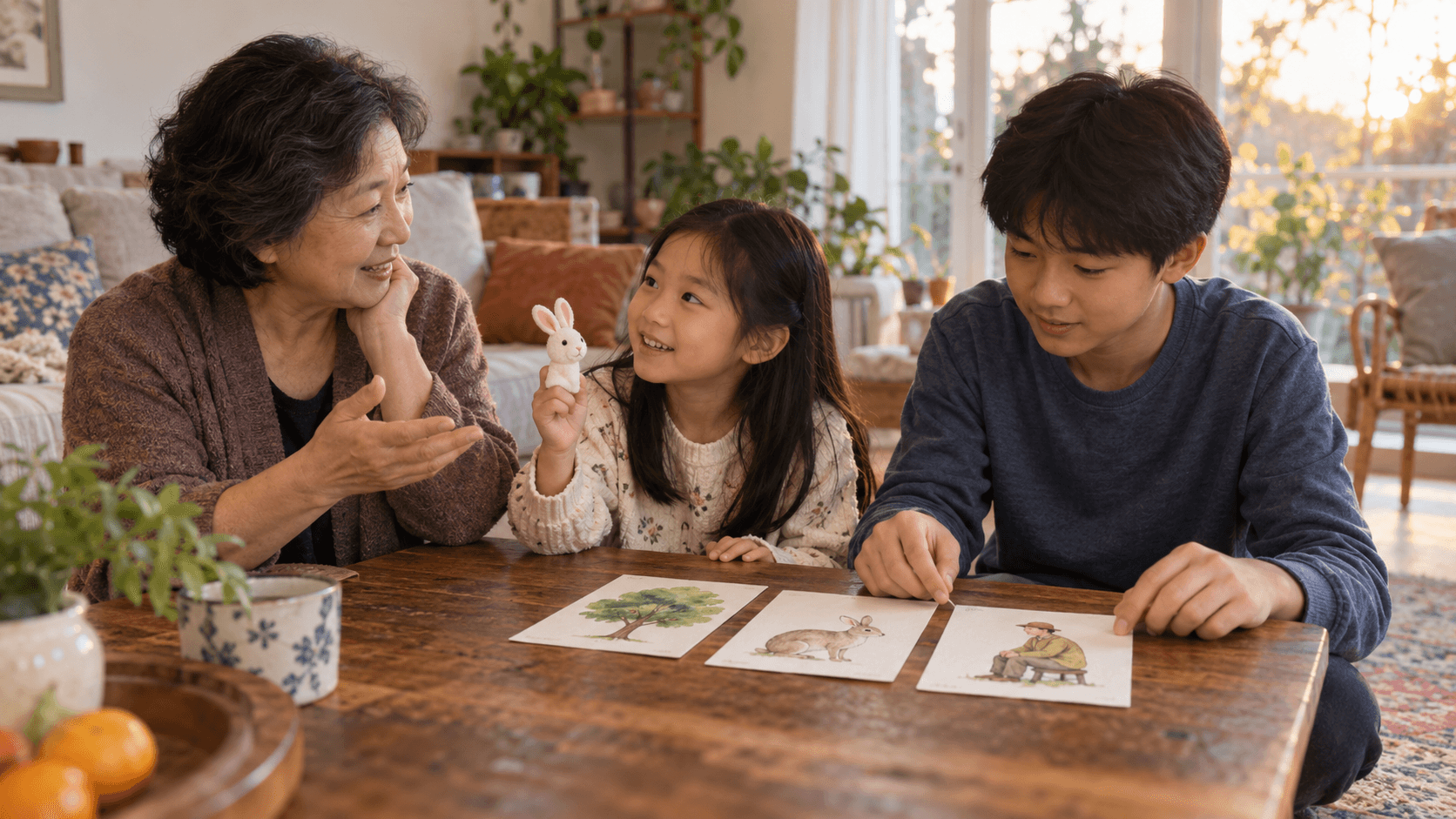
How Should Children Prepare for the GAPSK Oral Test? Listening, Responding, or Picture Description First?

What should a child practise first for GAPSK oral? Separate listening, sentence-building and follow-up questions
Oral preparation is not a matter of memorising every possible question. A child who hears a question but does not understand it, knows words but cannot form a response, or answers once but cannot take a follow-up needs a different task. Observe one short instruction, one familiar picture and one natural follow-up first, then decide whether understanding, responding or extending needs attention. GAPSK scope, levels and arrangements can change, so families should check the current official page and admission information before registration.
Should listening, picture response or follow-up come first? Three observable patterns point to three starting tasks
| What happens | A short task to try | Observable signal |
|---|---|---|
| The child does not understand the question | Give one one-step instruction with a familiar object or picture; the child points, chooses or acts. | Do they miss a keyword, need repetition, or complete the instruction after understanding? |
| The child knows words but cannot form a response | Ask one short question about a familiar picture; the child names one point then adds one detail. | Can they connect what they see into their own short response rather than repeat the question? |
| The child answers once but cannot take a follow-up | After the first reply, ask one related follow-up and allow a request for repetition. | Can they recognise its link to the first question or know when clarification is needed? |
What should be checked before starting? Put current official requirements and the family’s purpose on one list
What a family can organise
- Current school year, Mandarin settings and the oral difficulty they want to understand.
- Which step—listening, picture response or follow-up—stops first in a brief interaction.
- A quiet practice time and familiar topics where the child participates more easily.
What must be checked officially
- Current applicable level, scope, registration, venue and arrangements.
- Whether questions, modes, documents or dates have changed in the current notice.
- Any decision about eligibility, results, moving levels or admission notices.
How can a home observation become oral practice? Use four steps and change one part at a time
- 1
1|Check current official requirements and purpose
Read the current scope and notices before practice and state whether the goal is school use, an exam or a starting-point check. Signal: the parent can name the official information to confirm.
- 2
2|Use a short instruction to observe listening
Use one one-step prompt and notice how the child understands or asks for repetition. Signal: can they choose, point or take a related action?
- 3
3|Use a picture or familiar scene for a short response
Name one point then add one detail without a memorised script. Signal: can the child respond relevantly when a similar picture changes?
- 4
4|Add one follow-up and review
Ask only one related follow-up and review one adjustment. Signal: can the child take it, ask for clarification or try again?
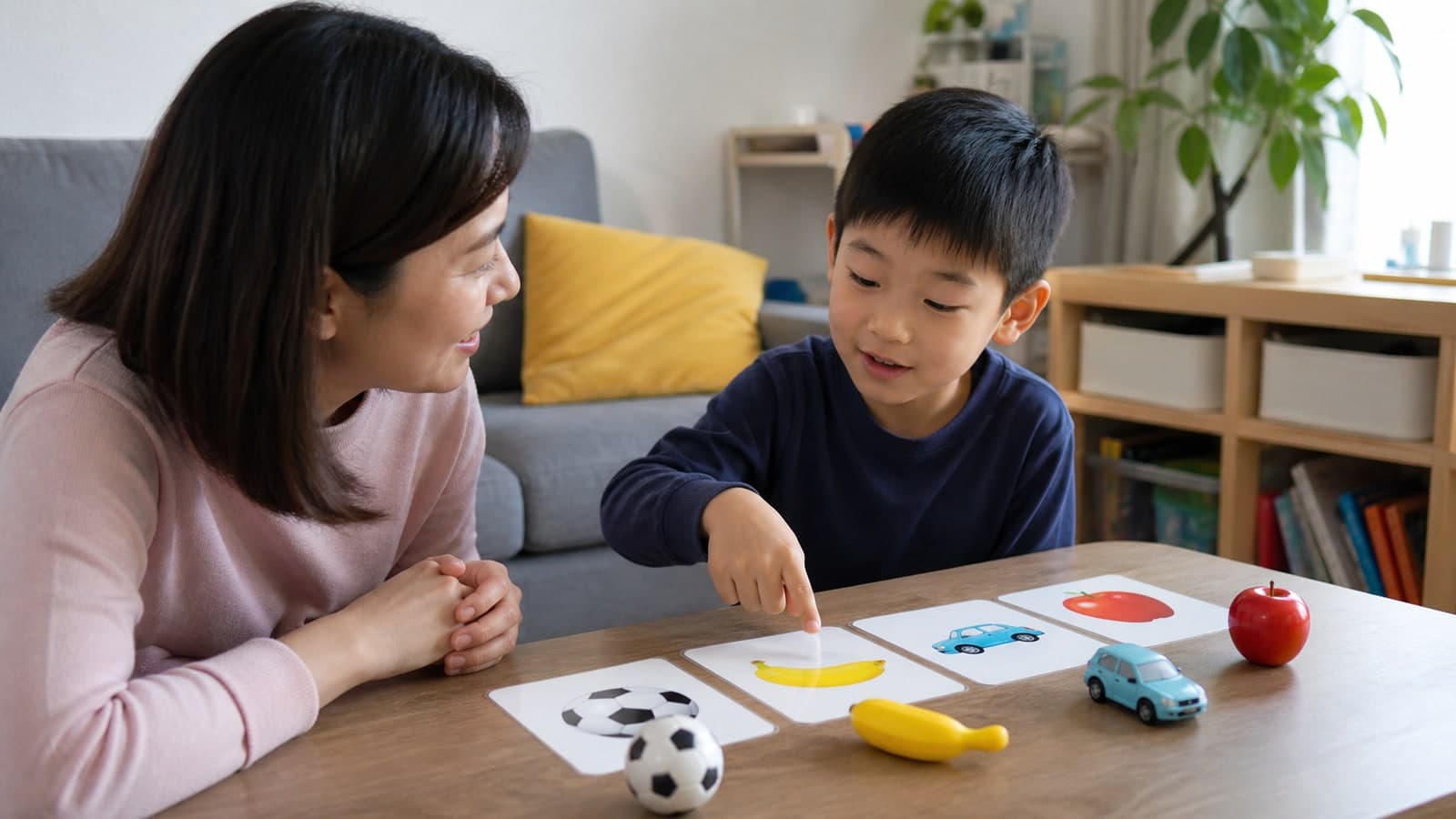
How can picture description avoid becoming a memorised script? Start with one point, then leave room for one follow-up
| Practice layer | What an adult can ask | What to avoid |
|---|---|---|
| What can be seen | Let the child name one person, object or action and wait for the response. | Finishing sentences for the child or asking three questions at once. |
| What is happening | Ask for one where-or-what detail, then try a similar picture. | Demanding the same long sentence every time so the child only memorises rhythm. |
| One more question | Ask one brief follow-up related to the child’s answer and allow “Please say that again.” | Turning follow-up into rapid-fire questioning that hides what the child understood. |
How long should home practice last? Completing one observable round matters more than a fixed duration
A family can keep a practice round to one instruction, one picture and one follow-up, then note one observation such as whether the child still names a point after the picture changes. If the child is tired, guessing or resisting, stop and use that observation to adjust next time. Practice cannot replace current official requirements or a teacher’s judgement of a starting point, and it does not guarantee an exam result.
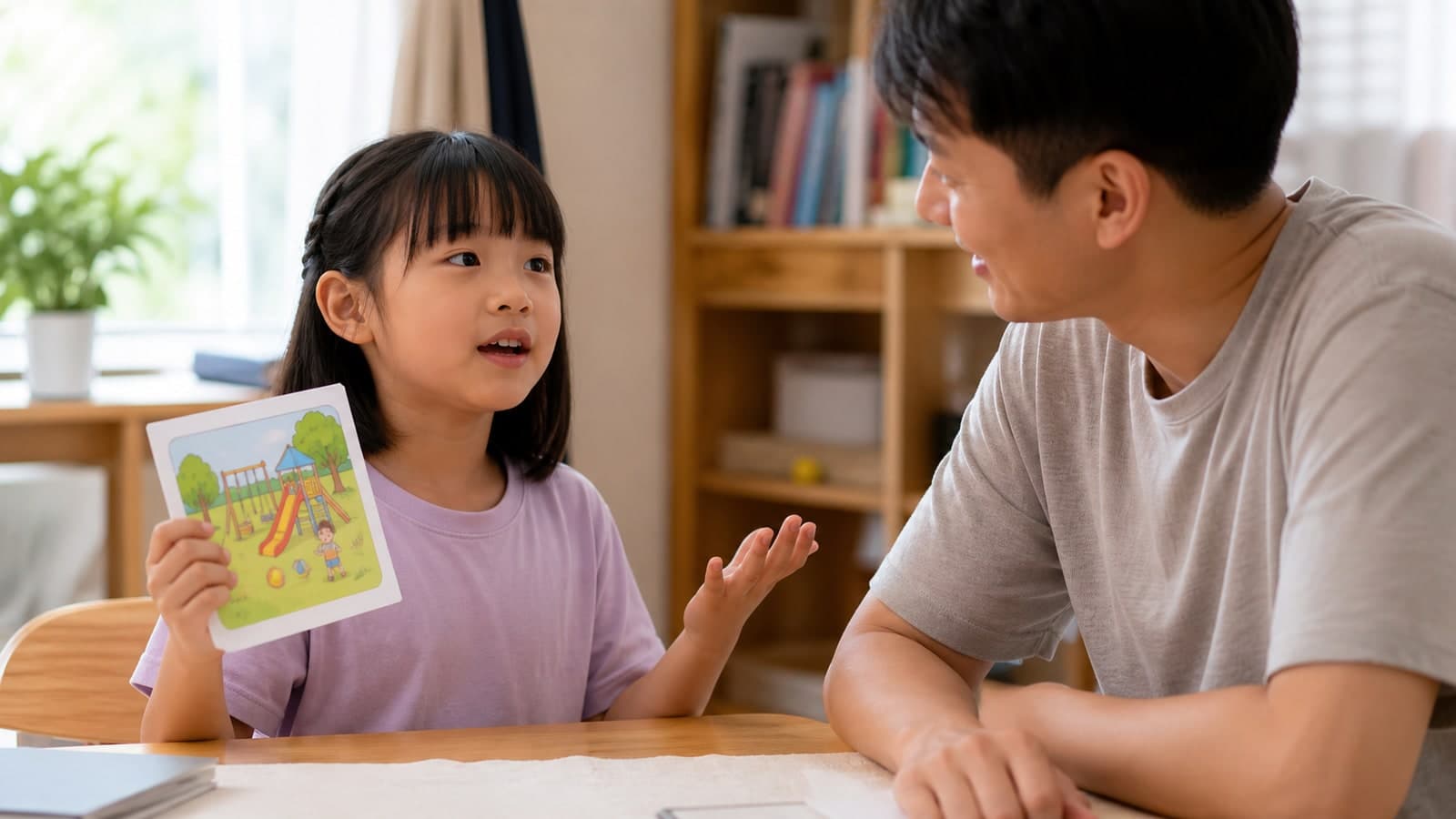
When should a teacher assess the child? When repeated tasks still do not explain the real sticking point
- The child depends on an adult model and stops when the picture or wording changes.
- The child says single words but adults cannot tell whether vocabulary, sentence-building, listening or nervousness ends the response.
- A follow-up produces silence or an unrelated reply and the family does not know whether to repeat, simplify or step back.
- The family needs to connect practice with current official information or school Mandarin use.
Connect an oral observation to Mandarin and exam pathways
Key points: identify one observable sticking point before choosing the next step
- Not understanding a question, not building a response and not taking a follow-up are different problems.
- Current GAPSK level, scope and arrangements must be checked officially before registration.
- One round of an instruction, picture response and follow-up is enough to record one observation.
- When repetition does not explain the difficulty, let a teacher observe live interaction and choose the next starting task.
Key takeaways
- Use a short instruction, picture response and follow-up to separate the true oral sticking point.
- Check all GAPSK arrangements against current official information rather than old notes.
- Record one observable signal at a time before selecting the next task.
Frequently Asked Questions
- Q1When should a child begin GAPSK oral preparation?
- Check current official requirements first, then use a brief interaction to understand listening, response and follow-up starting points. There is no fixed number of months to assume before the first sticking point is clear.
- Q2How should picture description be practised?
- Let the child name one person, object or action, add one detail, then answer one related follow-up. A similar new picture helps show whether the child understands the scene or only memorises a sentence.
- Q3How can GAPSK oral be practised at home?
- Use one short instruction, one picture and one follow-up in a round. Wait for the child, then record one observation such as needing repetition or still responding after a picture changes.
- Q4How can oral-test nervousness be handled?
- Shorten the task and make clear that the child can ask for repetition. Avoid adding many unfamiliar questions in one round; ask a teacher to observe if anxiety repeatedly prevents a response.
- Q5When should a teacher assess the child?
- Ask when a new picture stops the child, model answers are memorised, follow-up questions lead off-topic, or adults cannot separate listening, vocabulary and sentence-building.
- Q6How can current GAPSK requirements be checked?
- Before registration, open GAPSK’s current exam page, applicable scope, registration information and admission notices. Levels, dates, question modes and arrangements can change.
Online language education in Hong Kong · 17 years of teaching
Written by the Jinghua Language academic team. Founded in 2009, our centre specialises in live one-to-one online language tuition for students aged 3 to 18, covering Mandarin Chinese, English, Spanish, public examination preparation and recitation training, with 38 teaching and coaching awards to date.
Meet the academic team and editorial standards →About Us →Awards & Honours →
Published 2026-08-27 · Updated 2026-08-28