
How to Practise Group Recitation: Timing, Formation and Voice Parts
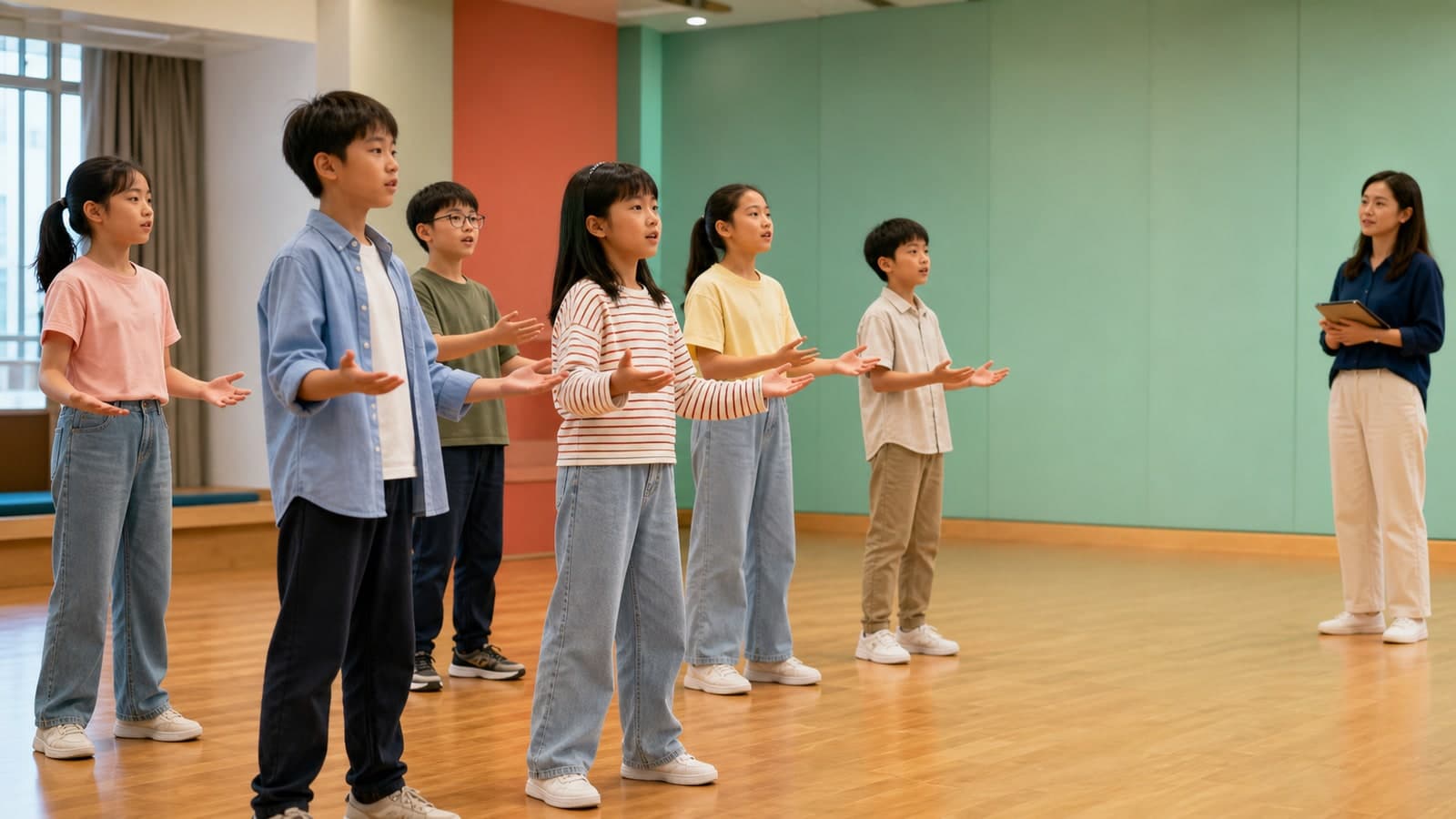
How is group recitation different from solo recitation?
Solo recitation concentrates diction, tone and body language in one performer. Group recitation has to sound and move like one layered system. It is not simply adding individual volumes together: when breath points, pauses, emphasis and eye lines disagree, more people expose more differences. Rehearsal should begin by agreeing what the text means, not by adding movement.
Group versus solo recitation: which problem does the team need to solve?
| Dimension | Group / choral recitation | Solo recitation |
|---|---|---|
| People and responsibility | Each performer owns a voice part and must hear the team's rhythm and volume. | One performer owns the full interpretation, sound, movement and recovery. |
| Voice work | Unison needs alignment, hand-offs need contrast, and key lines must stand out without competing. | One voice builds its own tone, pace and emotional turns. |
| Formation and eye line | Spacing, turns and sight lines serve the text rather than visual busyness. | There is less formation work; focus stays on the audience, gesture and individual stage presence. |
| Common risks | Rushing, dragging, drifting formation or one voice covering the group. | Forgetting, nerves, shallow breathing or a flat interpretation. |
| Useful evidence | A recording shows which passage is uneven or which part is unclear, then the team can repair it. | The performer can explain diction, pauses, emphasis and emotional choices line by line. |
What are the five rehearsal steps? Sound first, movement second
- 1
1 | Assign voice parts and roles
Use timbre, comprehension and the text's needs to assign unison, hand-offs, lead or response; roles can be revised.
- 2
2 | Align pronunciation, rhythm and breathing
Confirm diction, pauses, breath and beat line by line before combining parts; a recording reveals unevenness better than memory.
- 3
3 | Practise formation and eye line
Use simple floor marks for spacing, entrances and turns so movement does not hide a teammate or break the sound.
- 4
4 | Add emotion, emphasis and movement
Give each movement a reason in the text. Start with key lines and turns instead of adding every gesture at once.
- 5
5 | Simulate and record problems
Run the piece under performance conditions, check entry, ending, pauses and formation recovery, then schedule the next repair.
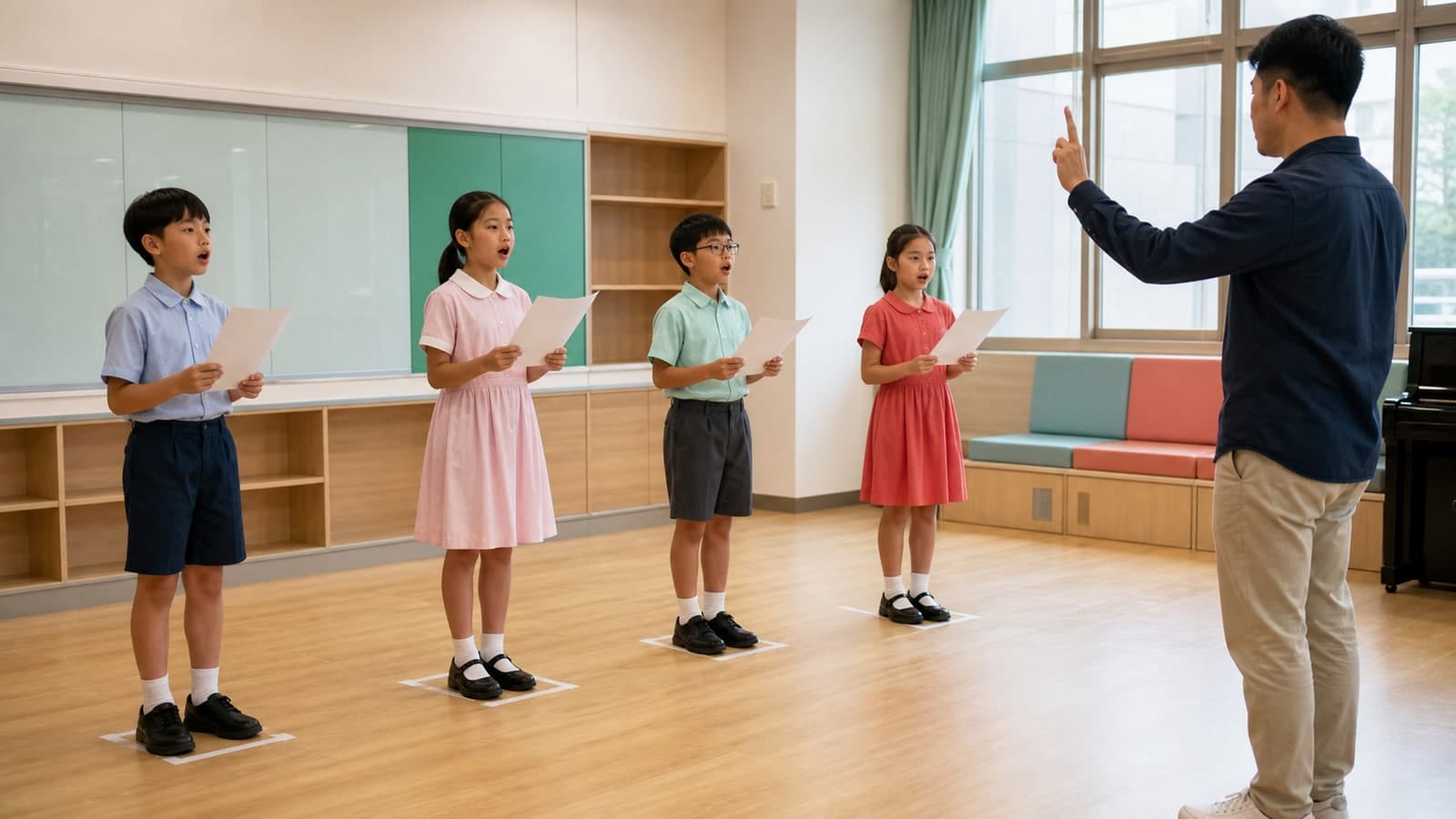
How should voice parts be assigned so they do not cover one another?
Voice parts are not simply a high-versus-low split. Use the narrative, dialogue and emotional turns to decide who leads, responds, speaks in unison or leaves space. Every child should know when to speak, when to listen and how to support the whole without rushing. If one part is consistently unclear, adjust position, volume and line ownership before adding bigger gestures.
Only splitting the group
- Divide lines evenly without assigning meaning or emotional responsibility
- Each performer waits for a cue instead of listening to the whole
- A missed line or rhythm change stops sound and formation together
Task-based voice parts
- Assign lead, response, unison and silence around the text's turns
- Each part knows its speak, listen and hand-off signal
- Use recordings and short repeats to check layers, not just louder volume
What should be checked before rehearsal and stage time?
| Moment | Observable sign | First repair to try |
|---|---|---|
| Entry and positions | Everyone knows the entry order, spacing and facing, and stops searching for a place after standing. | Use floor marks and silent movement before adding lines. |
| Volume and diction | The back is clear and key words are not covered by one loud performer. | Adjust spacing and breath support, then compare voice-part recordings. |
| Beat and unison | Openings, pauses, endings and breaths land together. | Use one beat or hand cue, shorten the passage and rebuild the full text. |
| Hand-offs | The next part hears its signal without rushing or leaving a gap. | Use a key-word cue and gradually remove the prompt. |
| Ending and recovery | The final line, hold and exit are clear; the team continues after one small error. | Create one recovery cue and backup position instead of adding new movement. |

How should competition rules and categories be checked? Use the latest HKSMSA notice
Hong Kong Schools Speech Festival categories, entry routes, materials, venues and documents can change by edition and class. HKSMSA asks participants to read the relevant regulations and class requirements. Parents should not transfer group size, timing or prop rules from another competition to the Schools Speech Festival. The rehearsal route here is a general teaching suggestion; before entry or performance, check the current regulations, syllabus and notice item by item.
From group recitation practice to courses and festival resources
Key takeaways
- Group recitation is a shared system of interpretation, breathing, rhythm, formation and voice parts—not stacked volume.
- Compared with solo recitation, it adds voice-part, spacing, hand-off and team-recovery tasks.
- The five steps are roles, sound alignment, formation, expression and full simulation.
- Track one or two observable problems per rehearsal; recordings are more useful than simply adding time.
- HKSMSA categories, regulations, materials and documents follow the current official notice, not another competition's rules.
Frequently Asked Questions
- Q1What is the difference between group and choral recitation?
- Both are forms of group recitation; the exact name and requirements depend on the event or syllabus. Rehearsal still needs unison, hand-offs, voice parts, breathing, formation and team timing rather than separate solo pieces placed together.
- Q2How should voice parts be assigned?
- Start with the text's narrative and turns, then assign lead, response, unison and silence while considering each child's tone, comprehension and listening habits. Everyone should know when to speak, listen and hand over.
- Q3Does a larger group make a better result more likely?
- Not necessarily. More performers can create layers but also increase timing, volume, spacing and recovery demands. Suitability depends on a shared rhythm and interpretation, not headcount alone.
- Q4How should movement and formation be designed?
- Secure spacing, sight lines and sound first, then add a small number of movements that serve a turn in the text. Movement should not hide a teammate, interrupt breathing or exist only to create noise.
- Q5What problems appear most often in rehearsal?
- Rushing, dragging, one voice covering the group, lost entry positions, broken hand-offs and an uneven ending are common. Record the piece, choose one or two repairs and test them in the next run.
- Q6When should a teacher assess the group?
- Ask for an assessment when the team cannot synchronise, children do not understand their part, or movement starts to harm diction and rhythm. The teacher should review interpretation, voice parts, positions and recovery rather than only adding rehearsals.
Online language education in Hong Kong · 17 years of teaching
Written by the Jinghua Language academic team. Founded in 2009, our centre specialises in live one-to-one online language tuition for students aged 3 to 18, covering Mandarin Chinese, English, Spanish, public examination preparation and recitation training, with 38 teaching and coaching awards to date.
Meet the academic team and editorial standards →About Us →Awards & Honours →
Published 2026-08-17 · Updated 2026-08-17