A1 Movers Speaking: Helping Your Child Give Their Own Answers
My child freezes when the question changes. What should we practise first?
Your child knows how to say that flying a kite is their favourite activity. Ask who came with them, and they start the same sentence again. Stay with the kite, pause and give them time to work out that this question asks for a person. A short answer such as I flew it with my aunt. does the job. In practice, you can check that they understand the question in a familiar language before returning to English.
This guide uses Cambridge English A1 Movers as its example. The Speaking test includes picture tasks and questions about the child. A rehearsed introduction cannot cover both. The kite activity below was written for home practice. Check the official information for the version your child plans to take, since tasks and instructions from another level may differ.
What can we prepare together at home?
| Preparation | What your child can do at home | What to confirm |
|---|---|---|
| Get to know a task | Look at one current official example together and say what it asks you to do | The level, version, test-centre arrangements and official instructions |
| Choose a real detail | Choose an ordinary experience and pick a person, a place or an action to talk about | Which parts are practice ideas and which are requirements, if the distinction is unclear |
| Practise asking for help | Try politely asking someone to repeat a question you didn't catch | What the applicable official instructions say about getting help |
| Make a note | Say which question was hardest and what prompt helped | The next practice focus with a tutor, using the notes as observations |
How can one experience produce two different answers?
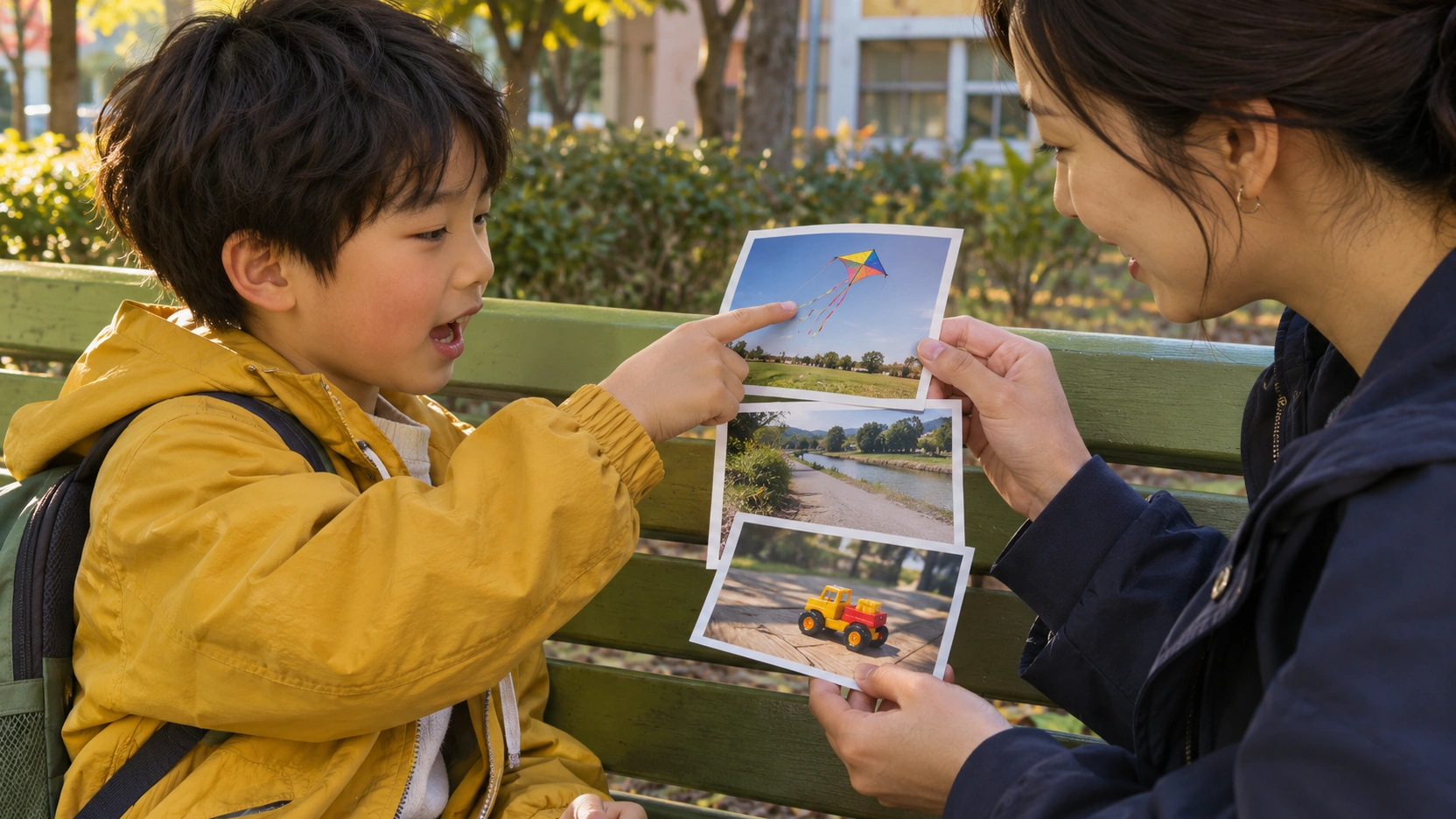
Imagine your child flew a kite by the river with their aunt on Sunday. Put a picture to one side and ask one question at a time. Wait for the first answer before moving on. These examples were written for home practice.
| Question to ask | A possible short answer | What the question asks for |
|---|---|---|
| Who flew the kite with you? | My aunt flew it with me. | The person who was there |
| Where did you fly it? | We flew it by the river. | The place where it happened |
Getting familiar with the task
- Look at an example to understand what the picture or question calls for
- Choose a relevant detail and use words they already know
Repeating a script
- Start the same speech whether the question asks who or where
- Go back to the start if a word is forgotten, with little room to change the answer
How do we run one short practice at home?
- 1
Confirm the exam and level
Check the name and version your child is preparing for and consult the centre's information. If they have no exam planned, use the activity as general listening and speaking practice.
- 2
Look at one official example
Pick a single task. Invite your child to tell you whether it asks them to find a picture difference or respond using their own ideas.
- 3
Choose one real event and ask two questions
Ask who was there, then ask about the place or an action. If your child pauses, give them a moment or point to a photo and let them choose their words.
- 4
Record what helped
Keep a note of whether they missed the question, needed English words or felt nervous. Change one thing next time and tell a tutor what changed after the prompt.
Notice whether your child can tell what information a question asks for, give a relevant answer, choose a new detail as the question changes and ask for help when needed. The amount of support may vary from one conversation to another. One practice attempt can guide the next step, but cannot predict an exam result.
Discuss a suitable starting point for speaking exam preparation
Key takeaways
- Use the official information for the relevant version and distinguish exam tasks from home activities.
- Change the question about the same experience so your child chooses a relevant detail.
- Note the help needed to listen, choose an answer and ask for clarification.
Frequently Asked Questions
- Q1Is it useful to memorise common phrases?
- Common phrases can give your child words to choose from. Change the question and see whether they can pick a phrase that fits. If they can only repeat the whole script, shorten both the question and the answer.
- Q2Does this approach apply to every children's English speaking test?
- Responding to the question is a general practice goal. The exam covered here is A1 Movers. When choosing an exam, check your child's goal and starting point alongside the provider's current tasks.
- Q3What if my child understands but cannot start in English?
- Let them choose a real detail first. Offer a word or two possible cues and let them build a short reply. Use less support on the next round when they are ready.
- Q4Can my child take photos or prompts into the exam?
- The photos here are for home practice. Check the official rules and centre instructions for the version your child will take, including what materials and help are allowed.
- Q5How can I observe without knowing the marking criteria?
- Note which question had to be repeated, what your child actually said and which prompt helped. Share those observations with a tutor. You don't need to mark the answer.
- Q6What should I tell a tutor when asking about exam preparation?
- Share the exam and level you are considering and one recent speaking or listening task that was hard for your child. Ask about available teaching arrangements and check registration and centre details with the organiser.
Online language education in Hong Kong · 17 years of teaching
Written by the Jinghua Language academic team. Founded in 2009, our centre specialises in live one-to-one online language tuition for students aged 3 to 18, covering Mandarin Chinese, English, Spanish, public examination preparation and recitation training, with 38 teaching and coaching awards to date.
Meet the academic team and editorial standards →About Us →Awards & Honours →
Published 2026-11-28 · Updated 2026-11-28